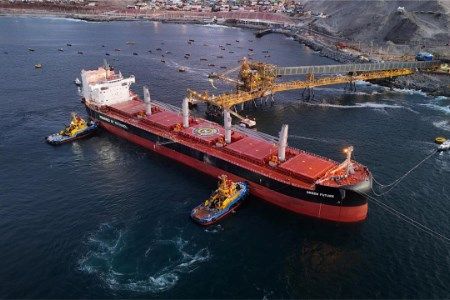
Marine biofuel has the potential to become an environmentally friendly alternative fuel, and the FAME (Fatty Acid Methyl Ester) component of the marine biofuel will be able to reduce CO2 by about 84% in the well-to-wake (from fuel generation to consumption) process without changing current engine specifications. This marine biofuel is comprising 24% of FAME blended with very low sulfur fuel oil (VLSFO) and uses renewable organic resources such as biomass which don’t utilise as foodstuff and feed crop. In “K” LINE's Environmental Vision 2050 -Blue Seas for the Future*¹, it has set the 2030 interim target of improving CO2 emission efficiency by 50% over 2008, surpassing the IMO target of 40% improvement. Furthermore, "K" LINE set its new target for 2050 as “The Challenge of Achieving Net-Zero GHG Emissions”. As an action plan, "K" LINE will continue to work on the introduction of new fuels, which have a low environmental impact and take on the challenge of achieving the targets set forth.

Sol Klappholz
Assistant Editor
Sol graduated with a degree in Philosophy, Politics, and Economics from the University of Warwick, including a year abroad studying at the Erasmus University Rotterdam.
Outside of work Sol enjoys reading, cooking, and adding to his music collection.